
The Simplest Way to Coordinate Accessories With Your Outfit

Nora Whitmore
5 min read
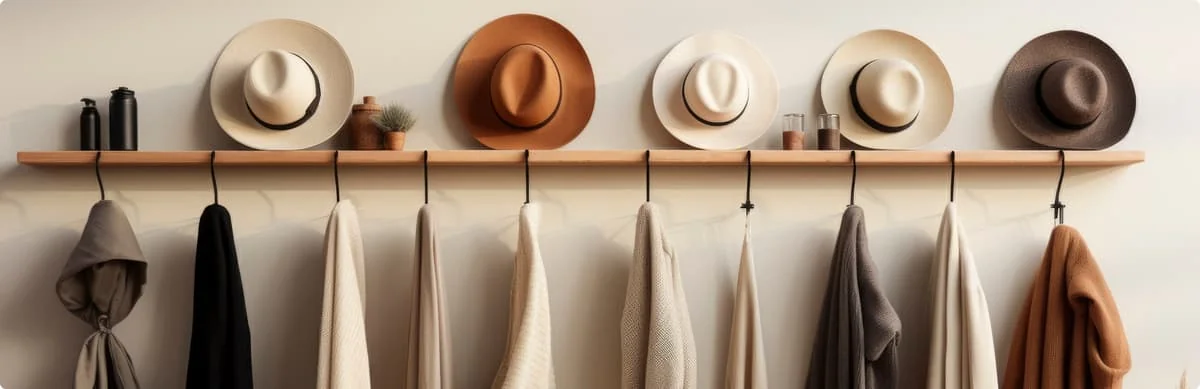
There's a very specific feeling when an outfit looks almost right. The silhouette works, the colors make sense, everything technically fits, and yet something still feels unfinished. In most cases, the issue is not the clothes themselves. It's how the accessories are working (or not working) with them.
Coordinating accessories is what turns an outfit into a look. The good news is that it doesn't require a huge collection of bags or jewelry, and it definitely doesn't mean everything has to match perfectly. What it does require is a bit of intention. Once you understand how to align mood, metal, proportion, color, and texture, styling becomes much simpler.
Here's the easiest way to approach it.
Start With the Mood of the Outfit
Before adding anything, look at your outfit as a whole and identify its aesthetic. Is it tailored and polished? Soft and romantic? Minimal and modern? Relaxed and casual?
Accessories should reinforce that mood, not compete with it.
A structured blazer with tailored trousers pairs naturally with sleek metal jewelry, clean-lined shoes, and a refined handbag. A flowy dress feels more cohesive with softer shapes, subtle texture, and delicate details. A simple jeans-and-tee combination can handle something slightly bolder, like a chunky chain or statement earrings, because the base is understated.
When the accessories reflect the same overall aesthetic as the outfit, the result feels intentional and elevated. That sense of cohesion is what makes everything look pulled together.
Choose Your Metal and Repeat It
One of the simplest styling tricks for coordinating accessories is choosing a metal tone and repeating it throughout the look.
Whether you gravitate toward gold or silver, consistency creates polish. When your earrings echo the hardware on your belt or your bag chain complements your rings, the details feel connected rather than random.
If you're unsure which metal flatters you most, your skin undertone can offer guidance. Warmer undertones tend to glow in gold, while cooler undertones often shine in silver. Neutral undertones can usually wear both beautifully. This is also where understanding your personal color palette can help, as certain metal tones naturally harmonize with specific seasons.
The key is subtle repetition. It does not need to be obvious, just intentional.
Balance Proportions
Great outfit styling is often about contrast and balance. If your clothing is simple and streamlined, your accessories can carry more visual weight. A minimalist black dress, for example, creates space for bold earrings, a sculptural cuff, or a striking bag.
On the other hand, if your outfit already includes volume, texture, prints, or strong tailoring, more refined accessories will keep the look from feeling overwhelming. Delicate hoops instead of oversized chandelier earrings. A sleek clutch instead of an embellished tote.
When everything competes for attention, nothing truly stands out. Coordinating accessories is really about deciding where the focal point should be and allowing the rest to support it.
Use Color Intentionally
Matching your bag exactly to your shoes is no longer the standard for polished dressing. Modern styling is more about color harmony than duplication.
Accessories work best when they either echo a color already present in your outfit or serve as a single, thoughtful accent. A navy blazer paired with a burgundy bag feels elevated because the tones complement each other. A neutral outfit becomes instantly more dynamic with one carefully chosen pop of color, whether that's in the shoes, the bag, or even a statement earring.
If you prefer a more understated approach, layering different shades within the same color family, such as beige with caramel or cream with chocolate brown, creates depth without looking busy.
Intentional color coordination makes an outfit feel styled rather than accidental.
Add Interest With Texture
Texture is often overlooked, but it plays a major role in how cohesive an outfit feels. Even when you are wearing a single color from head to toe, mixing materials creates dimension.
A monochrome black outfit becomes more interesting when you combine smooth leather with suede, matte jewelry with structured fabric, or a woven bag with tailored pieces. These subtle variations prevent the look from feeling flat.
When coordinating accessories, consider not only their color and shape, but also their finish. Texture is what gives an outfit richness and visual depth.

The 3-Question Rule
If you prefer a straightforward styling formula, use this before leaving the house:
- Do these accessories reflect the mood of my outfit?
- Am I repeating at least one element, such as metal, color, or texture?
- Does the overall look feel balanced?
If the answer is yes to all three, you can trust that your accessories are working with your outfit rather than against it.
Common Accessory Mistakes to Avoid
Even a strong wardrobe can feel disjointed when accessories are not coordinated thoughtfully. Some of the most common styling mistakes include overmatching every detail, layering too many statement pieces at once, ignoring scale, or choosing metals that clash with your undertone.
Another frequent oversight is treating accessories as an afterthought. When they are considered from the beginning, rather than added at the last minute, the entire outfit benefits.
Make It Easier With an Accessory Capsule
If decision fatigue is part of the problem, simplifying your options can make a noticeable difference. A small accessory capsule allows you to mix and match effortlessly.
Consider building around:
- One structured everyday bag
- One relaxed crossbody or shoulder bag
- A warm metal jewelry set
- A cool metal jewelry set
- One statement piece
- A neutral shoe that works across multiple outfits
When your accessories already align with your wardrobe's color palette and overall aesthetic, coordinating them becomes intuitive. You spend less time second-guessing and more time feeling confident in what you're wearing.
Final Thoughts
The goal of coordinating accessories is not perfection. It is cohesion.
When your accessories align with the mood of your outfit, repeat a key element, balance proportions, and introduce thoughtful color or texture, everything feels intentional. Styling becomes less about rules and more about harmony.
With a simple system in place, finishing your outfit stops feeling like a guessing game and starts feeling effortless.
